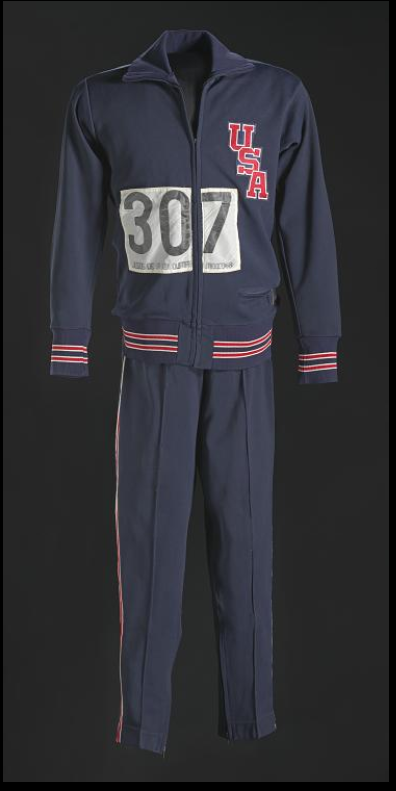
Olympic warm-up suit worn by Tommie Smith at the 1968 Olympics in Mexico City
2015.231.2
You might not immediately recognize the name Tommie Smith, and perhaps cannot quite place the significance of his tracksuit, part of the NMAAHC’s “Sports: Leveling the Playing Field” exhibition, but it’s very likely you have seen the photo that propelled Smith and his uniform to the spotlight:
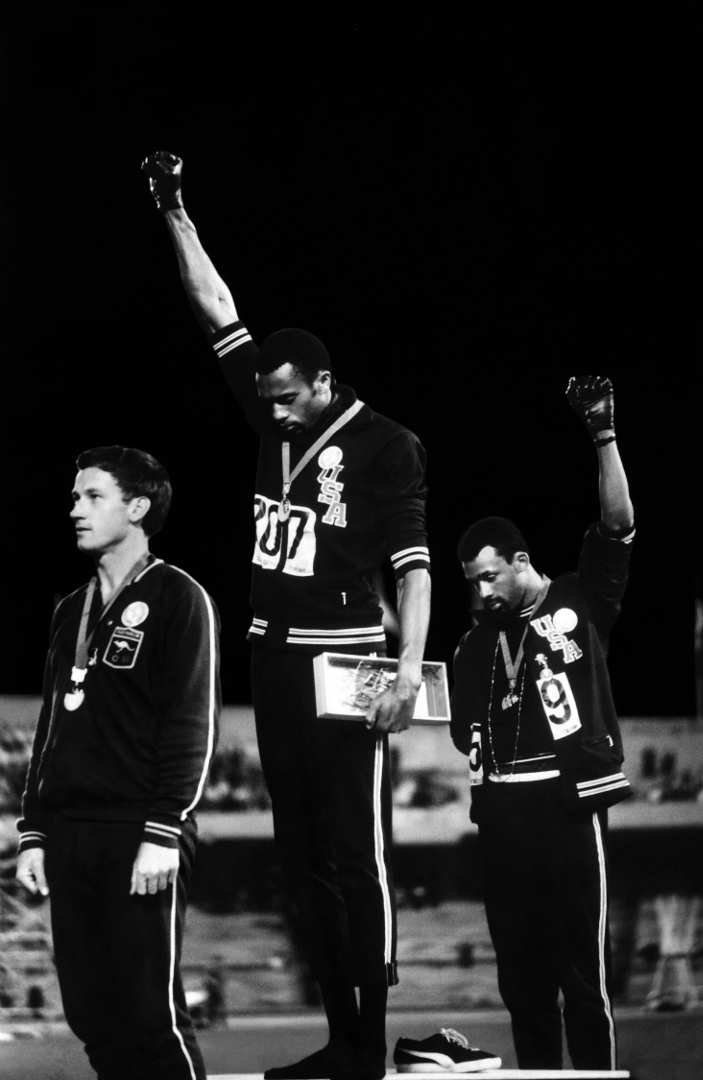
1968 Olympics, Mexico City
1968 was a year of turmoil, upheaval, and revolution. The Vietnam War was in its deadliest year, the assassinations of Martin Luther King, Jr. and Robert Kennedy stunned the nation, and the chaos and violence at the Democratic National Convention in Chicago only served to highlight the growing rifts in American society.
Tommie Smith was 24-years-old in 1968, when he won gold in the 200-meter dash. Teammate John Carlos had taken bronze. Both African-American men had planned their protest carefully.
From a Washington Post article written on the 50th anniversary of the moment:
“It was a cry for freedom,” Smith said in a 2016 interview with the Smithsonian’s Museum of African American History and Culture, which acquired the tracksuit he was wearing that day, along with the shoes he raced in, and the box he held on the podium, which contained an olive tree branch. Carlos wore a long string of beads falling from his neck, his jacket unzipped in utter defiance of Olympic rules. … Everything captured in the photo held a special significance. Smith and Carlos had walked slowly to the stand as if in mourning, their hands clasped behind their backs — each holding a running shoe. They walked across the grass of the stadium in black stocking feet. They had taken off their shoes specifically to protest poverty in the United States. To protest lynchings of black people, they wore a scarf and beads. … They bowed respectfully as the Olympic official placed their medals around their necks. But when the anthem began to play, they lowered their heads to protest the hypocrisy of a country that proclaimed to uphold freedom and human rights around the world but neglected to protect the rights of black Americans.
(Brown, D. L. (2018, October 16). ‘A cry for freedom’: The Black Power salute that rocked the world 50 years ago. Washington Post. Retrieved March 05, 2019.)
The boos and jeers in the stadium that day were likely not caused by the beads or open jacket, but rather the men’s fists, raised in a Black Power Salute.
Like many Americans, I had seen this picture a thousand times without taking the time to dig any deeper. I knew what a “black power salute” looked like, and understood it as a form of protest, but not much more than that.
Then several years ago, I was helping one of my nieces prepare for a middle school forensics competition, in which she was going to give a speech for the “Moment in History” category. She chose that moment at the 1968 Olympics when Tommie Smith and John Carlos raised their fists in one of the most iconic images of a turbulent decade. I think I find the event all the more moving having learned about it with her, as she placed it in the context of her life and understanding of what American bravery can look like.
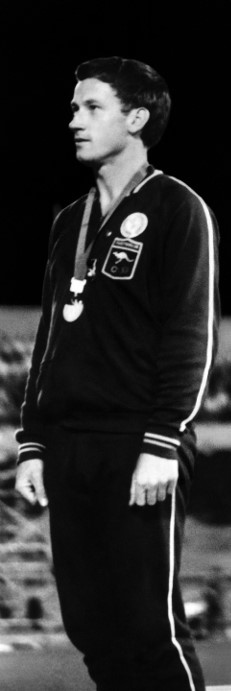
Side Note: The silver medal spot on that podium was occupied by Australian sprinter Peter Norman. He was not the passive observer many assume, and his fascinating and ultimately tragic story will likely be the subject of a later post.
 The Museum Kat
WOW, such a great story Katherine…. You are such a natural storyteller. And now I really want to know what happened to Peter Norman… I so look forward to working with you.
LikeLiked by 1 person