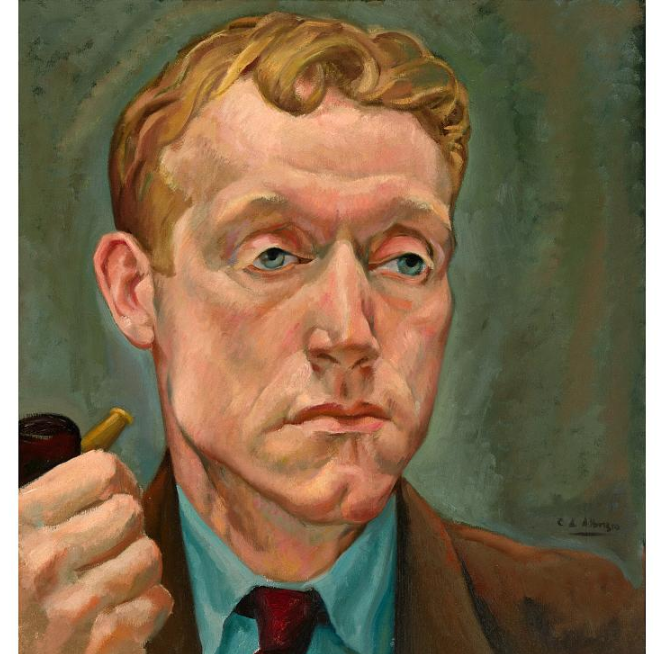
Jessica said she chose him in part because there was melancholy in his eyes, the great author smoking him pipe. Maybe writer’s block was plaguing the man? We both agreed that there was something more, not quite sadness…but Robert Penn Warren was definitely not smiling.
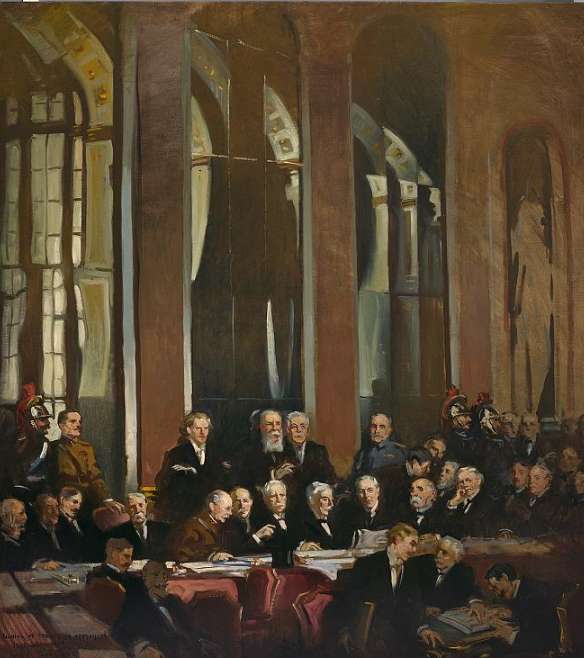
I chose the group of men at first because of their mustaches: great big bushy magnificent things. Important white mustaches on important white men. When Jessica and I showed each other the portraits we had chosen, I became convinced I had made a bad decision. There are 30 men in the painting, most of them look very similar, wearing very similar facial expressions, and none but Woodrow Wilson are immediately identifiable (unless viewed by a serious military history geek). Suddenly, the whole thing seemed…boring.
Signing of the Treaty of Versailles, 1919 by John Cristen Johansen
But that’s the power of a good story. If one thing has been repeated for us by our guest teachers, it’s been that stories can make the ordinary into the extraordinary.

What if, we asked, we weren’t telling the story of Woodrow Wilson, “Black Jack” Pershing, or Tasker Bliss (whose presence in the portrait I only know because of the extended description on the Portrait Gallery website)? What if we told the story of one of the other figures in Signing of the Treaty of Versailles, 1919? Perhaps one of the anonymous soldiers standing guard in his feathered cap? Who better to tell his story than Robert Penn Warren?
And that’s how Robert met the soldier, and made him extraordinary.
 The Museum Kat